Deep Dive
Beyond Magic Words: System Engineering for AI
November 20, 2025 · 6 min read · By Yusuf Tunc Karadut
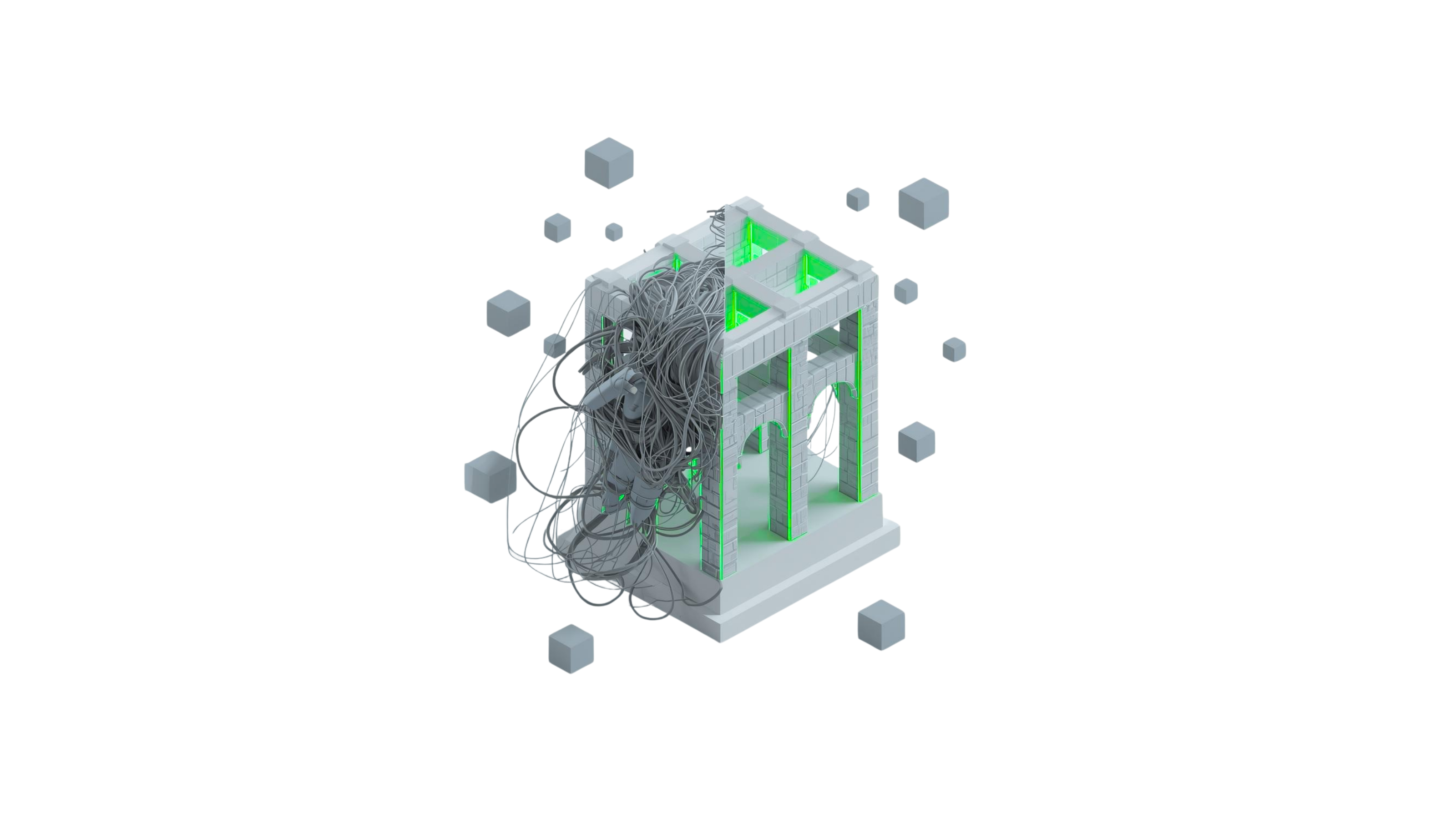
If your system breaks because you changed an adjective, the problem isn't your prompt; it's your architecture. "Prompt engineering" as a discipline is temporary scaffolding. The mature approach is System Engineering: standardized inputs, structured outputs, evaluation pipelines.
The Fragility of Natural Language Prompts
Hand-crafted prompts are brittle. Model version changes, few-shot example ordering, even whitespace can cause performance swings. Prompts operate in high-dimensional latent space using vague natural language approximations of logic. Relying on emotional appeals ("it is critical for my career") to improve outputs is a sign of an unoptimized system.
DSPy: Compiling Prompts
Khattab, Singhvi, Maheshwari et al.'s DSPy framework demonstrates the shift. Instead of writing prompts, you define signatures (input → output interfaces) and chain them into programs. A compiler automatically optimizes instructions and selects few-shot examples to maximize your metric.
Switch models from GPT-4 to Claude? Recompile. The framework generates optimal prompts for the new architecture. This moves optimization from human trial-and-error to algorithmic search.
Constrained Decoding: Guaranteed Structure
Parsing free-text output is a reliability hole. Constrained decoding tools (Guidance, Outlines) mask logits during inference, permitting only tokens that conform to a predefined grammar: JSON Schema, SQL syntax, whatever you need. The output is mathematically guaranteed to be syntactically valid.
This shifts the failure mode from "parsing error" (fatal) to "content error" (validatable). Build the machine that contains the stochastic component. Don't negotiate with it.
Anthropic's Constitutional AI work by Bai, Kadavath, Kundu, Askell et al. demonstrates how principles can be systematically encoded into model behavior, moving from ad-hoc prompting to structured behavioral constraints.
Sources
Khattab, O., Singhvi, A., Maheshwari, P., et al. (2024)
DSPy: Compiling Declarative Language Model Calls into Self-Improving Pipelines
ICLR 2024 · arXiv:2310.03714Bai, Y., Kadavath, S., Kundu, S., Askell, A., et al. (2022)
Constitutional AI: Harmlessness from AI Feedback
arXiv:2212.08073